Inverter vs Conventional Generator: Which One Should You Buy?
Inverter vs generator: what an inverter costs per watt, how much quieter it runs, which devices need clean power, and when an open frame is the better buy.


An inverter generator rebuilds its power electronically and lets the engine slow down when the load is light, so it runs quieter, burns less fuel at part load and puts out the clean power laptops and TVs like. A conventional generator, the open-frame kind with the engine on show, runs flat out all the time but gives you far more watts for your money. Sleeping near it, camping with it or plugging in electronics? Buy the inverter. Need the well pump, the freezer and the furnace on a budget? Buy the open frame.
Affiliate disclosureAs an Amazon Associate we earn from qualifying purchases made through links on this page. Commissions never change our ratings.
Inverter vs generator: the differences at a glance
Strictly speaking, an inverter generator is a generator too. When people type "inverter vs generator", they mean the inverter against the conventional, open-frame design that has powered job sites and storm nights for decades. We rate 51 inverter generators and 68 conventional ones, and the table puts what their own listings state side by side.
| What the listings state | Inverter | Conventional (open frame) |
|---|---|---|
| Generators we rate | 51 | 68 |
| Typical running watts (median) | 3,500 W | 8,875 W |
| Biggest running figure stated | 13,500 W | 20,000 W |
| Median price per running watt | 24 cents | 13 cents |
| State a noise figure | 28 of 51, from 52 dB(A) | 9 of 68, from 58 dB(A) |
| State THD of 3% or less | 19 | 3 |
| Mention an eco or economy mode | 19 | 2 |
| Mention parallel capability | 28 | 4 |
| List a 120/240 V outlet | 9 | 41 |
| Also run on propane | 38 | 57 |
Read the price row twice. Per running watt, an inverter costs nearly twice as much as a conventional generator, and that one number explains most of the decision. Everything below is about what the extra money buys.
How each design makes its power
A conventional generator bolts the alternator straight to the engine. To put out 60 Hz household current, a typical portable spins at a steady 3,600 rpm whether you run one lamp or the whole kitchen. That's why it sounds the same at light load and at heavy load, and why it burns more fuel than it needs on a quiet night. Some list an automatic voltage regulator (AVR) to hold the voltage steady (six of the 68 we rate say so), but the waveform still follows the engine.
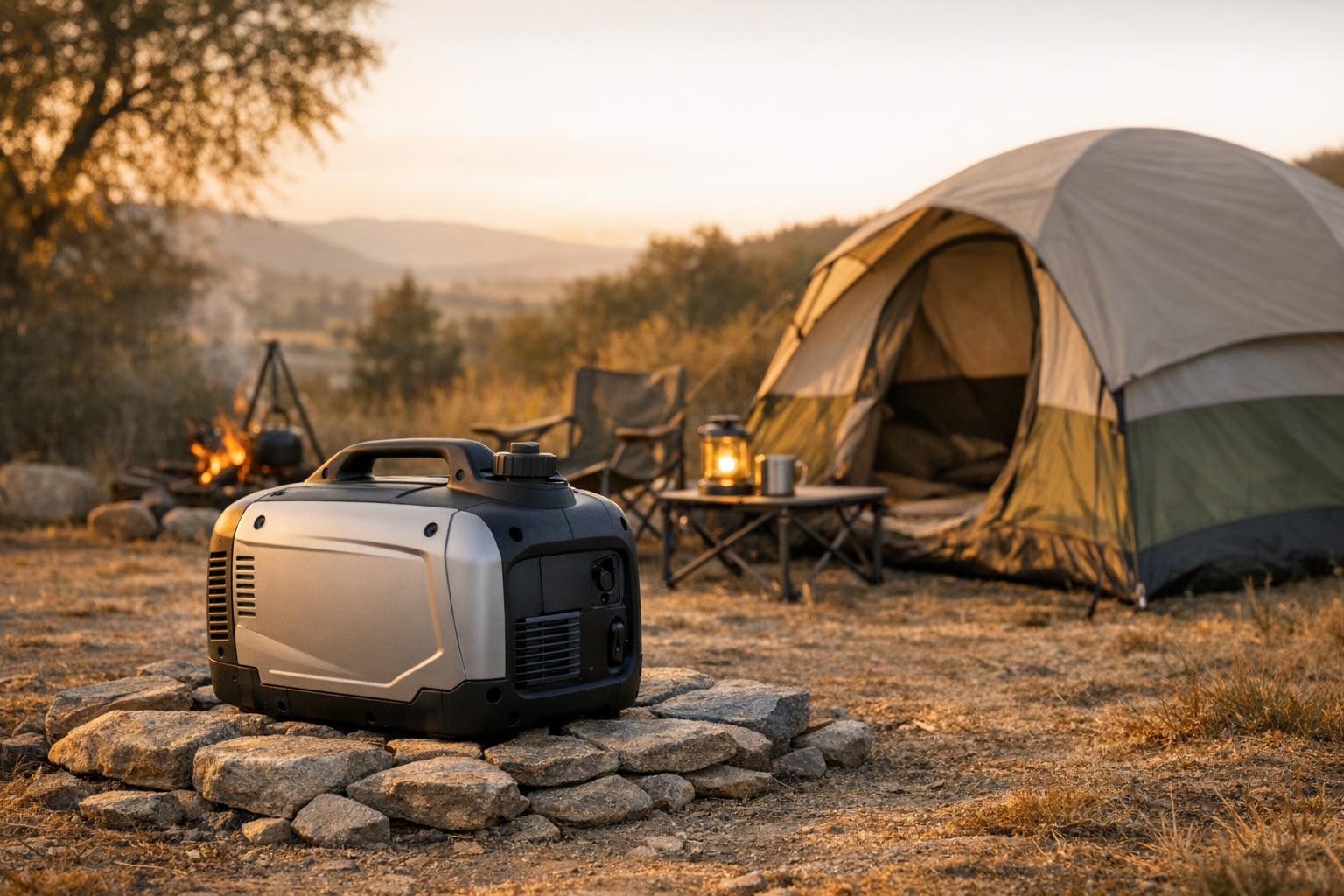
An inverter generator takes the alternator's raw output, turns it into DC, then builds fresh AC with electronics. Because the frequency no longer depends on engine speed, the engine can throttle down when the load drops, which makers sell as eco or economy mode. The same electronics are what let a listing quote a low total harmonic distortion (THD) figure. Most inverters then sit in a closed, muffled case, though not all: four of the inverters we rate are sold as open-frame designs, which is why you'll see "open frame inverter" in a few product names.
Cost per watt: why the open frame still sells
Here's the part the inverter ads skip. Across the 34 inverter listings with a stated running figure and a price we recorded on Nov 18, 2026, the median works out to about 24 cents per running watt. For conventional generators it's about 13 cents. Prices may have changed since, but the gap doesn't come from one sale or another: an inverter pays for its electronics and its case.
Same watts, two price tags. The DuroMax XP12000EH, a conventional dual fuel frame, states 9,500 W running and was $1,405.39 on Nov 18, 2026. The Westinghouse 12,000W Dual Fuel Inverter, one of the bigger inverters we rate, states 9,000 W running and was $1,899 on Nov 18, 2026. Both prices may have changed, but that's about $490 more for roughly the same running power. If raw watts for a well pump and a freezer are what you need, that difference goes a long way toward the cord, the inlet box and the propane tanks you'll want anyway.
The open frame's other quiet advantage is simplicity: fewer electronics between the engine and the outlet, and an engine that sits out in the open for oil changes. Every model in the top five of our best 10,000 watt generators is a conventional frame.
How much quieter is an inverter generator?
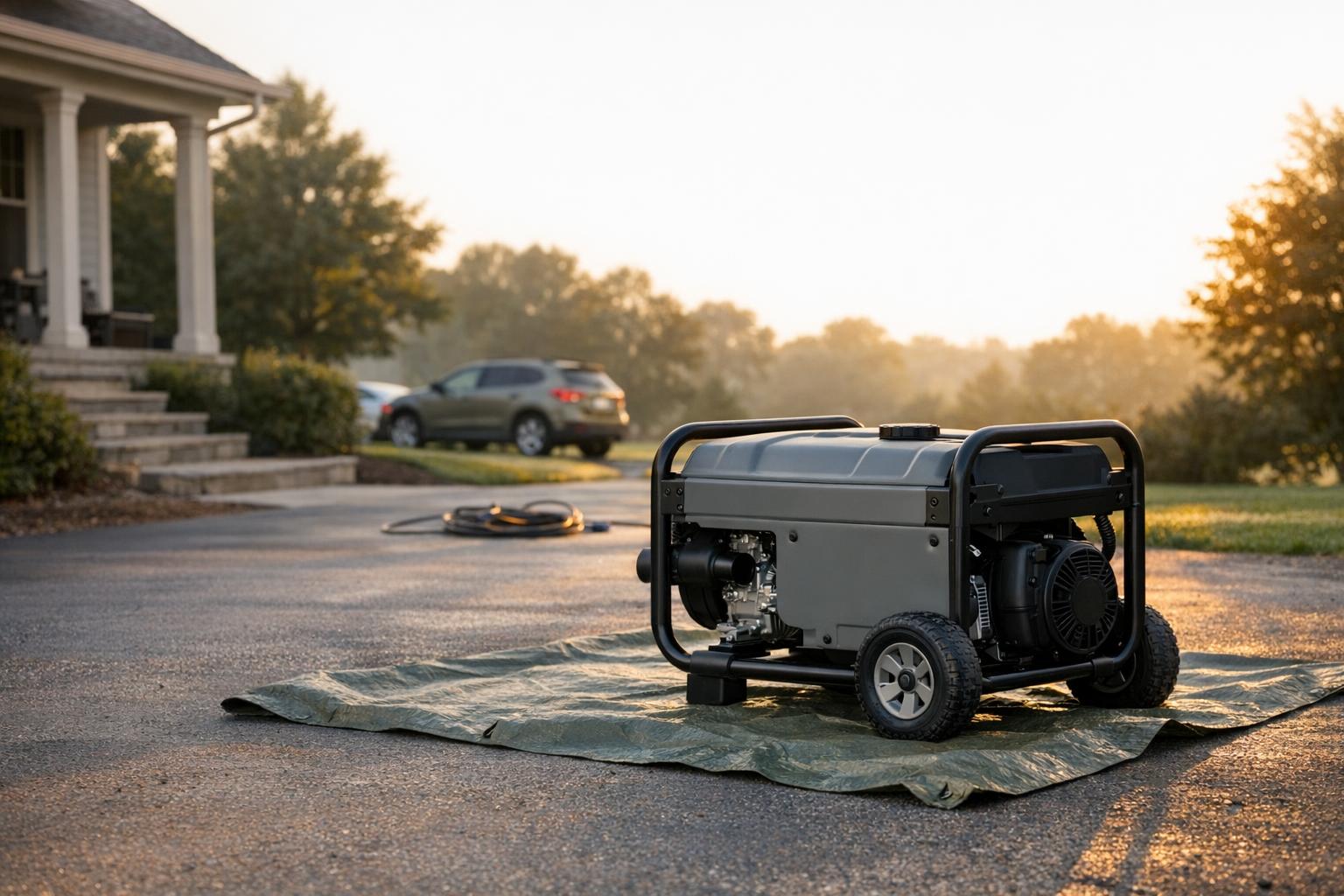
Usually a lot, and you can see it in the paperwork before you hear it. Of the 51 inverter listings we rate, 28 state a noise figure, down to 52 dB(A), with a median of 61 dB(A). Only nine of the 68 conventional listings state a number at all, the lowest being 58 dB(A). Makers usually measure at quarter load and about 23 feet, so read every figure as a best case, not a promise.
The quiet comes from three things working together: the engine idling down with the load, and a closed case with its own muffler. At full load an inverter gets loud too, because the engine has to spin up to feed it. Our best quiet generators ranking keeps only models that state 60 dB(A) or less, and every one of its top five is an inverter. If you camp, live on a small lot or plan to sleep through an outage, this section alone may settle it.
Pure sine wave and THD: which devices care
THD measures how far the output strays from a clean sine wave; lower is cleaner. Every inverter listing we rate that quotes a figure promises 3% or less: that's 19 of the 51 inverters, against three conventional generators. So a "pure sine wave generator" is, in practice, almost always an inverter. A few open frames quote a low figure in their manual too, and they deserve credit for it.
Which of your loads care? A space heater, a kettle or an old incandescent bulb won't mind. The ones worth protecting have a circuit board: laptops, TVs, routers, a fridge with a variable speed compressor, the control board of a gas furnace. If the manual of one of those asks for clean power or a low THD source, believe it and buy accordingly. Medical devices follow their maker's power guidance, never ours.
Fuel use and runtime
This is the argument for the inverter that gets the least attention, and it's a good one. A conventional generator burns close to the same fuel at a light load as at a moderate one, because the engine never slows down. An inverter in eco mode throttles back, so at the overnight load of an outage (the fridge cycling, a few lights, the router) it stretches a tank much further. The Westinghouse 5,000W Dual Fuel Inverter lists up to 18 hours on a 3.4 gallon tank. That's a light-load best case from the listing, not a schedule, but it shows the direction. Among the inverter listings we rate, 19 of 51 mention an eco or economy mode; among the conventional ones, two of 68.
Fuel choice works the same way on both designs. Of the generators we rate, 38 of 51 inverters and 57 of 68 conventional units also list propane, and both make fewer watts on propane than on gasoline. Our dual fuel vs gasoline guide covers that trade. For hours per tank and oil intervals, see how long a generator can run continuously.
Can an inverter generator run a house?
Up to a point. The typical inverter we rate states 3,500 W running: plenty for the fridge, the freezer, lights, the internet and a sump pump, not for central air or an electric range. Large inverter generators exist: we rate ten that state 9,000 running watts or more, topping out at the GENMAX 17,000W Tri-Fuel Inverter with 13,500 W. But 27 conventional generators clear the same 9,000-watt bar, for a lot less per watt.
Check the outlet panel before the brochure. Feeding a house through a transfer switch or an interlock kit wants a 120/240 V outlet (L14-30R or 14-50R), and nine of the 51 inverter listings mention one, against 41 of the 68 conventional ones. The connection itself is the same job for both designs: a licensed electrician, a permit, and the hardware our interlock kit vs transfer switch guide explains. Two smaller inverters can also run together on the maker's parallel kit; 28 of the inverter listings mention parallel capability, against four conventional ones.
Dual or single fuel inverter generator?
If the inverter is mainly for camping, gasoline-only keeps it light and simple. If it's for outages, we'd pay for dual fuel. A 20 lb propane tank keeps for years in the shed where gasoline goes stale in months, and on day three of a storm the gas station queue is not where you want to be. Expect fewer watts on propane, and size your load list against the propane figure in the manual, as our starting vs running watts guide shows.
Our best dual fuel inverter generators ranking is led by the Westinghouse 5,000W Dual Fuel Inverter at 9.2/10. Want the quietest of them? Cross-check with the quiet generators list, where every model states 60 dB(A) or less.
So which one should you buy?
Buy an inverter if you'll sleep within earshot, if the neighbors are close, if you camp or tow an RV, or if laptops, TVs and a furnace board are on your list. Our pick is the Westinghouse 5,000W Dual Fuel Inverter (9.2/10, 1,672 buyer reviews averaging 4.7/5): 3,900 W running and 5,000 W peak, gasoline or propane, and a stated 52 dB(A). Our best inverter generators ranking has the rest.
Buy a conventional generator if the plan is heavy: a well pump, a couple of freezers, the furnace and the fridge at once, through a transfer switch, on a sensible budget. Our pick there is the DuroMax XP12000EH (9.3/10, 3,966 buyer reviews averaging 4.5/5), with 9,500 W running and a 50 amp outlet, per its listing. It leads our best dual fuel generators for home backup. On a tighter budget, the Westinghouse 6,500W Dual Fuel states 5,300 W running and was $579 on Nov 18, 2026 (it may have changed).
Still torn? Picture where the generator will sit at 2 a.m. and what's plugged into it. That picture usually picks the design for you, and our generator sizing calculator does the rest of the arithmetic.
Our rated picks
The three best-rated models of our best inverter generators ranking, from the buyer review record and the listed specs. For this topic, also see best dual fuel generators, best quiet generators and best dual fuel inverter generators.


Product images: Amazon listings
Frequently asked questions
Is an inverter generator better than a regular generator?
Better for noise, for fuel use at light loads and for electronics; worse on watts per dollar. In the listings we rate, an inverter costs nearly twice as much per running watt (median, prices on Nov 18, 2026 that may have changed). For camping, RVs and essentials-only outages, the inverter usually wins. For heavy home backup on a budget, the conventional generator does.
Is an inverter generator worth the extra money?
If you will run it near people, near a campsite or for electronics, usually yes: you are paying for quiet, for fuel that lasts longer overnight and for clean output. If your plan is all heavy motors (a well pump, central air), the extra money buys watts you do not get, and a conventional frame is the better deal.
Is a pure sine wave generator the same as an inverter generator?
Not by definition, but in practice nearly always. Of the generators we rate, 19 inverters state THD of 3% or less, against three conventional ones. If clean power matters to you, check the THD figure in the manual of the exact model rather than going by the name.
Can a conventional generator run a laptop or a TV?
Plenty of people do it, and many chargers cope. The question is your device: if its manual asks for clean power or a low THD source, follow it, and look for a generator that states a low THD figure.
What is the biggest inverter generator you rate?
The GENMAX 17,000W Tri-Fuel Inverter, whose listing states 13,500 W running and 17,000 W peak, rated 7.7/10. We rate ten inverters that state 9,000 running watts or more; for home backup at that size, compare them with our best 10,000 watt generators.
Do inverter generators use less fuel?
At light and medium loads, yes, because the engine slows down with the load. At full load the difference shrinks, since both engines work hard. Among the 51 inverter listings we rate, 19 mention an eco or economy mode.